Baja SAE Series
Baja SAE is an intercollegiate engineering design competition where students design, build, and race off-road vehicles that can withstand rough terrain. Teams must engineer their vehicles to survive severe conditions while following strict safety and design requirements. Each year, teams compete in dynamic events, including acceleration, maneuverability, hill climb, and endurance racing.
As a freshman on the Baja SAE team, I quickly demonstrated strong technical capabilities and leadership potential, leading to my promotion to Chassis Lead within my first semester. In this role, I took charge of the vehicle's frame design and development while coordinating with all subteams to ensure seamless integration of components.
Key Responsibilities

Technical Leadership
Managed chassis design and manufacturing processes
Coordinated with all subteams for component integration
Led design reviews and validation meetings
Ensured manufacturing feasibility of designs
Fabrication
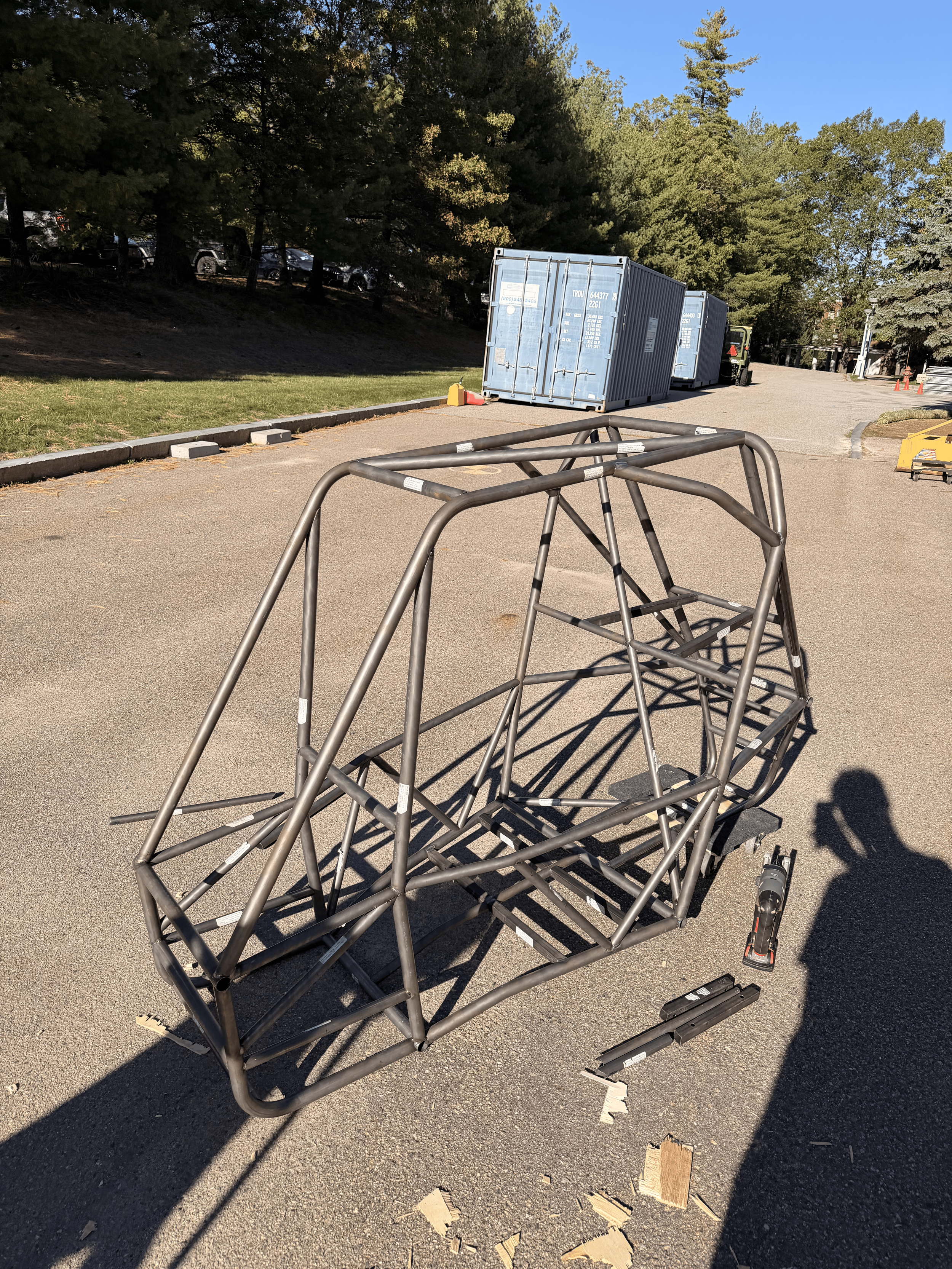
Tubes arrive individually based on our VR3 order (from technical drawings & CAD we had previously made) and are checked against the CAD to make sure they are all correct.
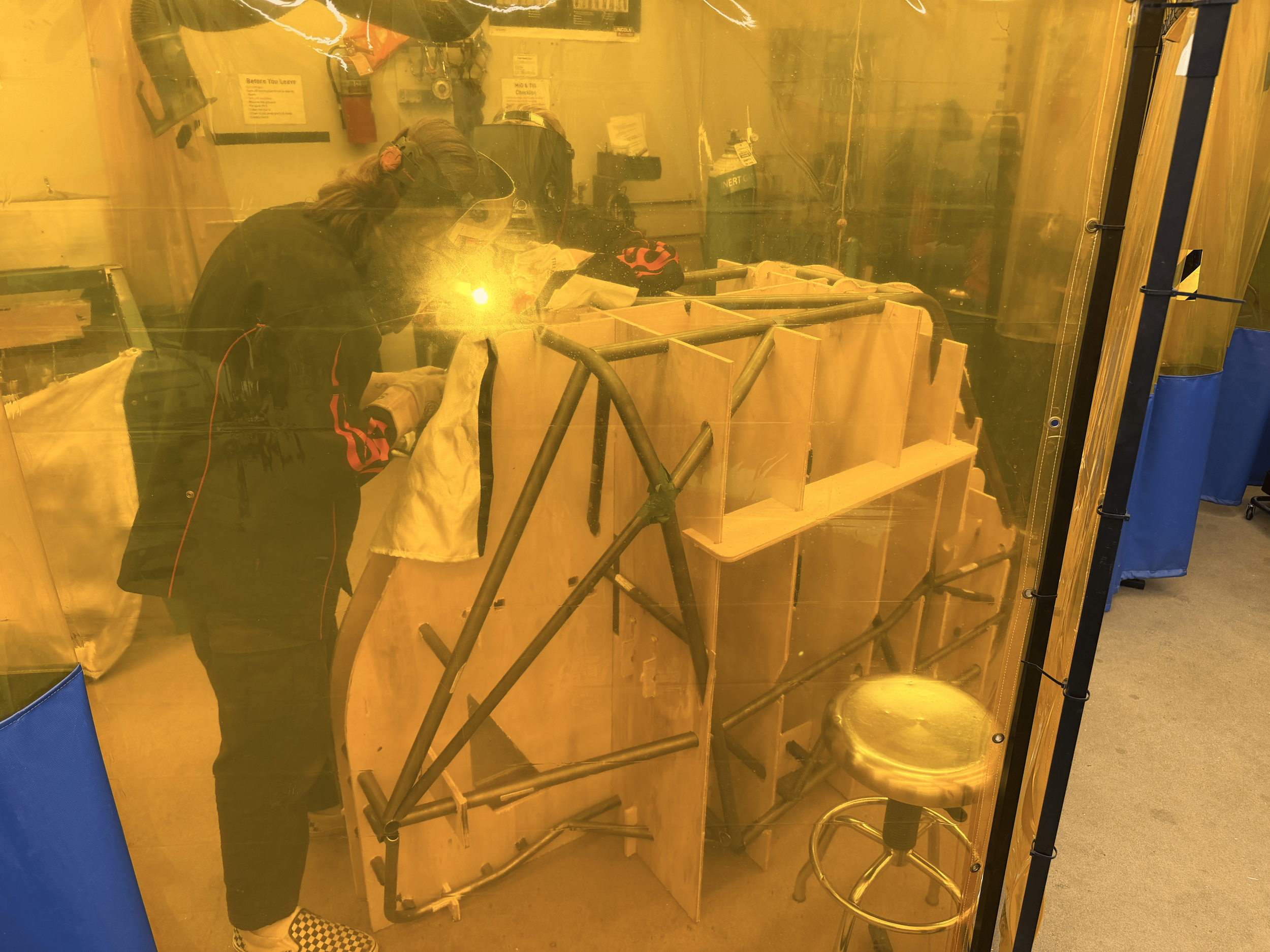
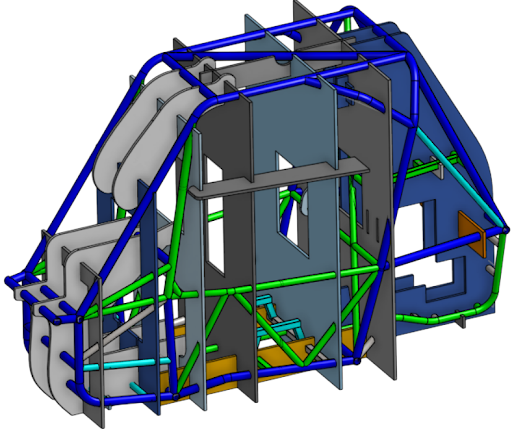
To weld the chassis tubes together, a Jig is required to support the tubes in the correct positions and allow to tack each tube to one another. To make this I seperated the chassis into key planes and followed the general guide that the main tubes need to be supported in at least 2 locations. From this I decided what wood we would be using to make the Jig on the CNC router which eventually was 1/8 inch plywood from home depot.
The JIG CAD can be seen bellow as well as pictures of the welding and JIG breaking on the right.


Design Improvements
1. Enhanced Cockpit Design
Increased interior space for better driver accommodation
Improved ergonomics for multiple driver sizes
Optimized entry and exit clearance
2. Engine Integration
Redesigned rear frame section for side engine removal
Eliminated previous constraint of engine being trapped in frame
Improved maintenance accessibility
3. Suspension Integration
Widened and reinforced footbox design
Optimized suspension mounting points
Enhanced tow hitch location for improved pulling performance

Fabrication & Assembly
Welding Expertise
Trained in TIG and MIG welding techniques
Developed proficiency in both methods
Applied welding skills to chassis construction
CAD Design
Mastered SolidWorks for chassis modeling
Utilized Weldments for frame design
Implemented Design for Manufacturing (DFM) principles
Analysis
Performed Finite Element Analysis (FEA)
Validated chassis performance under race conditions
Optimized structural integrity while minimizing weight